What Causes Off-Ratio Spray Foam
Off-ratio foam isn't random bad luck — it traces back to a handful of specific, well-understood equipment and process failures. Here's how each one actually happens, and why it matters for figuring out the right remediation scope.
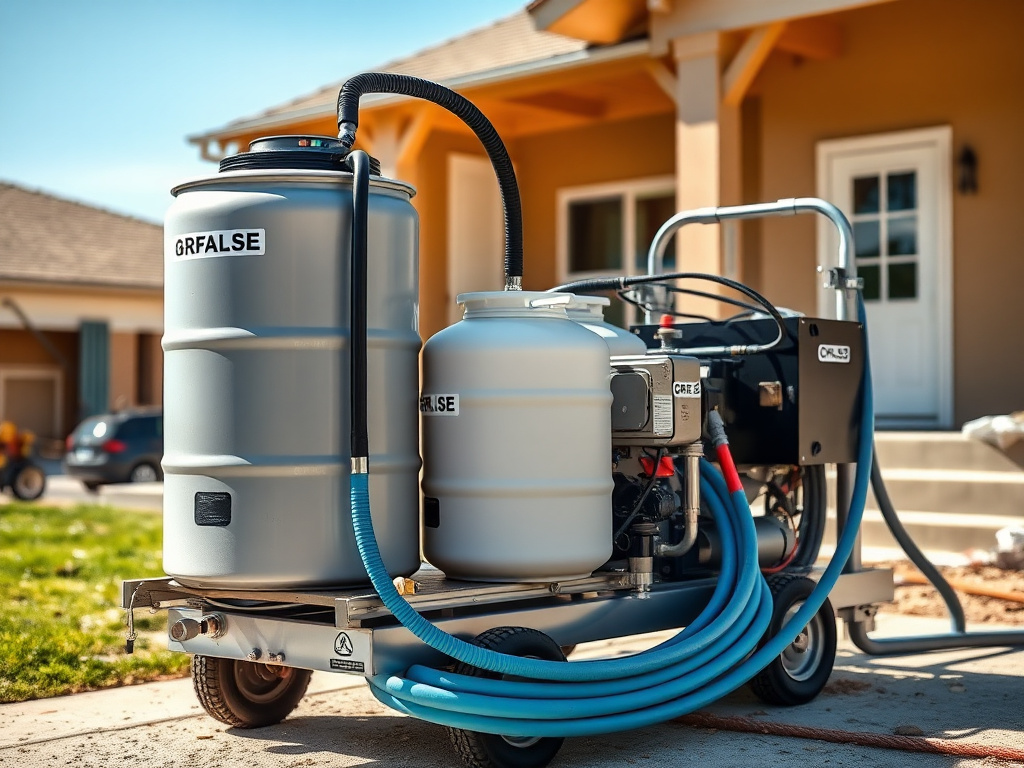
Not a simple spray job
A proportioner metering two chemicals to a matched ratio, at controlled temperature and pressure, has to hold steady across an entire application — with no chance to catch and correct a bad mix once it's reacted.
Proportioner miscalibration
The proportioner heats, pressurizes, and meters the A-side and B-side so they arrive at the gun in a matched ratio. Worn pumps, drifted calibration, faulty gauges, or cavitation (inadequate chemical flow to a pump) can all throw that ratio off — sometimes without the operator's equipment appearing to be miscalibrated at all.
Temperature outside the working range
Both chemicals need to be within a fairly specific temperature range for their viscosity to transfer accurately. Cold chemical (commonly below roughly 55°F) is too thick to move at the correct rate — a well-documented reason undercure spikes on cold mornings. Chemical that's too hot can cause blowing-agent boiling and pressure imbalance.
Expired or mismatched chemical lots
A-side and B-side components are formulated as matched sets with a shelf life. Chemical past its usable date, stored outside its required range, or mixed from mismatched lots can react unpredictably even with a technically correct volumetric ratio.
Humidity and substrate moisture
Excess moisture reacts with the isocyanate (A-side) on its own, consuming material that was supposed to react with the resin side instead. This can throw off the effective ratio at the surface even when the proportioner upstream is correct, and it can contribute to poor adhesion.
Applicator technique and experience
Overly thick single passes, inconsistent gun distance and speed, inadequate overlap, or spraying before a previous lift has cooled can all produce localized defects — which is part of why off-ratio foam is so often patchy rather than affecting an entire job.

Identifying the cause shapes the remediation scope.
A localized cold-morning defect in one attic bay calls for a different scope of work than a whole-job proportioner malfunction that affected an entire installation. Part of a professional evaluation is figuring out which of these factors was actually at play, not just confirming that a problem exists.
- Localized defects often trace to transient causes — a cold start, a technique issue
- Sitewide defects more often point to equipment or chemical-supply problems
- Installation records and conditions on the day of spraying are relevant context
Causes, answered
Temperature is one of the most common factors — cold chemical is too viscous to transfer at the correct ratio, which is why undercure issues spike on cold mornings. Proportioner miscalibration and worn pumps are the other leading cause.
Yes. Cavitation, out-of-range chemical or substrate temperature, high humidity, and application technique can all produce off-ratio conditions even on equipment that's technically calibrated correctly.
Many causes are transient rather than constant — a cold start-of-day pass, a technique issue at one spot, a brief cavitation event — which is why defects frequently show up as localized patches rather than affecting an entire installation.
Yes. Excess moisture reacts with the isocyanate component on its own, which can throw off the effective ratio at the surface and contribute to poor adhesion, even when equipment upstream is delivering a correct mix.
Request a professional off-ratio foam evaluation
Tell us what you're seeing — texture, odor, shrinkage, or a spot that never fully cured — and we'll put together a clear, no-pressure evaluation referral for your property.